
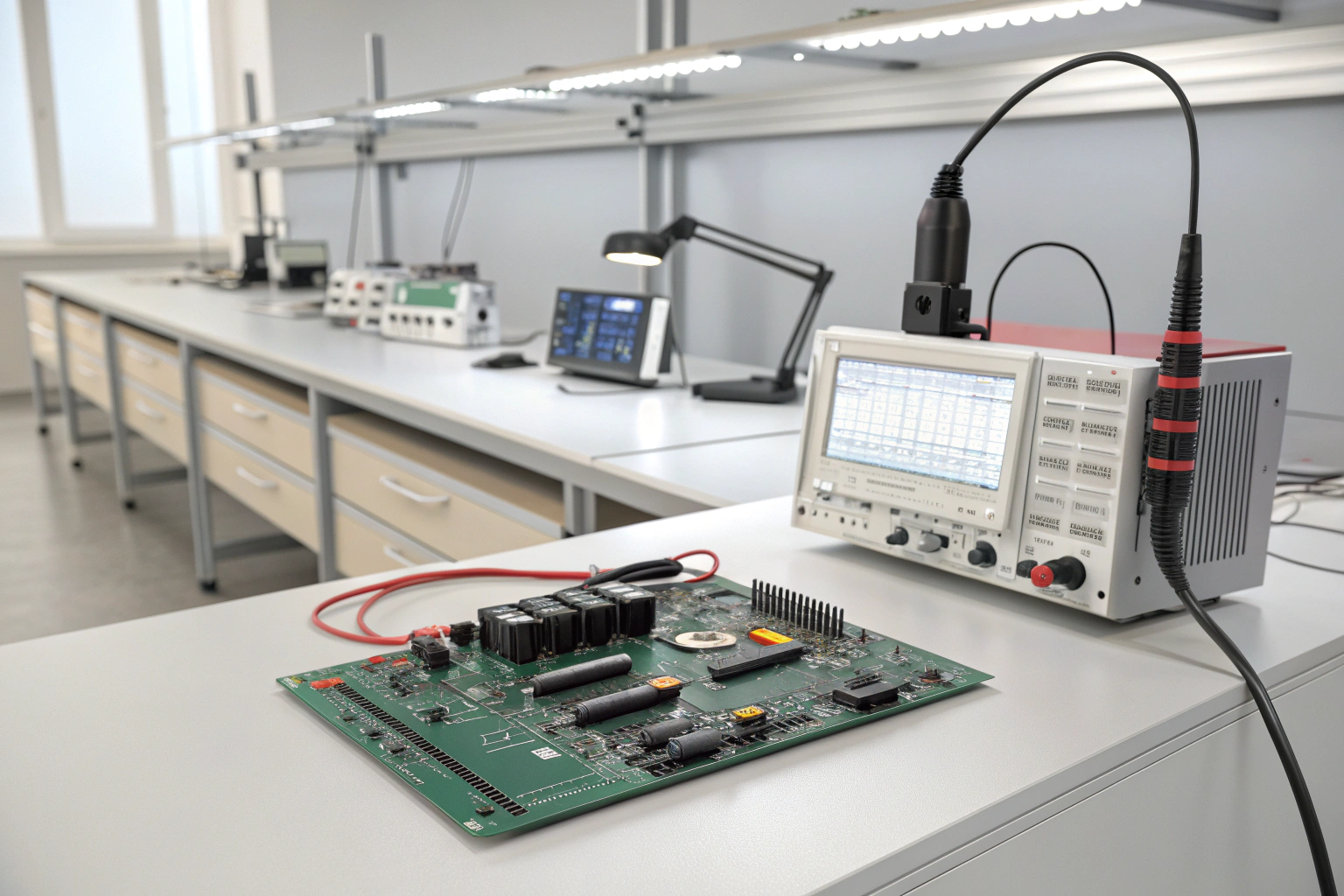
End to end security in iot is a comprehensive security strategy that protects data throughout its entire journey, from the sensor on a device to the network, cloud, and user application. This approach ensures data remains encrypted and authenticated at every stage, preventing unauthorized access, interception, or tampering. It directly addresses major user concerns about data privacy and the risk of devices being compromised, safeguarding the integrity and confidentiality of the entire IoT ecosystem.
Key Benefits at a Glance
- Comprehensive Data Protection: Encrypts data at all points—on the device, in transit over networks, and at rest in the cloud—to prevent unauthorized access and critical data breaches.
- Reduces Financial & Operational Risk: Prevents costly data breaches, service disruptions, and brand damage by securing the entire system, not just isolated components, against sophisticated attacks.
- Builds User & Customer Trust: Assures users that their personal data is private and their connected devices are safe from tampering, which is crucial for long-term product adoption and brand loyalty.
- Prevents Widespread Device Hijacking: Secures device identities and communication channels to stop attackers from taking control of devices for use in large-scale botnet attacks.
- Simplifies Regulatory Compliance: Helps organizations meet strict data protection standards like GDPR and HIPAA by providing a complete, verifiable security framework across the data lifecycle.
Purpose of this guide
This guide is for business leaders, developers, and IT managers looking to secure their Internet of Things (IoT) deployments. It solves the critical problem of protecting connected devices and sensitive data from the growing threat of cyberattacks. Here, you will learn the core principles of end to end IoT security, including device authentication, data encryption, and secure cloud integration. By understanding these concepts, you can avoid common security mistakes like weak credentials or unencrypted communication and build a resilient, trustworthy IoT system that protects your assets and customers’ privacy.
Understanding firmware engineering the hidden foundation of modern technology
Every time you press the power button on your smartphone, start your car, or adjust your smart thermostat, you’re interacting with firmware engineering – the invisible force that breathes life into electronic devices. This critical discipline bridges the gap between raw hardware components and the software applications we use daily, making modern technology possible through carefully crafted low-level programming.
Firmware engineering represents the specialized field of designing, developing, and implementing the foundational software that directly controls hardware components. Unlike traditional software that runs on operating systems, firmware operates at the deepest level of embedded systems, providing the essential instructions that allow processors, sensors, and other electronic components to function correctly.
- What firmware engineering is and how it differs from software engineering
- The critical role firmware plays in modern electronic devices
- Career opportunities and growth potential in firmware engineering
- Essential skills and responsibilities of firmware engineers
What is firmware engineering
Firmware engineering is the process of designing, developing, and implementing low-level software that controls hardware components directly. This specialized discipline focuses on creating the fundamental code that enables electronic devices to perform their basic operations, from initializing processors during startup to managing power consumption and controlling peripheral devices.
The term “firmware” itself reflects this unique position – it’s “firmer” than software but “softer” than hardware. Firmware is typically stored in non-volatile memory such as ROM, EPROM, or flash memory, ensuring it remains intact even when power is removed from the device. This persistent nature makes firmware the technology foundation upon which all other software layers depend.
- Firmware sits between hardware and software layers
- Stored in non-volatile memory like ROM or flash
- Provides hardware abstraction for higher-level software
- Controls basic device operations and initialization
What sets firmware engineering apart is its intimate relationship with hardware abstraction. Firmware engineers create the crucial interface layer that allows higher-level software to interact with hardware components without needing to understand the intricate details of register programming, memory mapping, or timing constraints. This abstraction enables application developers to focus on user functionality while firmware handles the complex hardware interactions.
Firmware vs software vs embedded systems engineering
Understanding the distinctions between firmware engineering, software engineering, and embedded systems engineering is crucial for anyone considering a career in these interconnected fields. While these disciplines often overlap in practice, each has distinct characteristics, challenges, and areas of focus.
Software engineering typically operates at higher abstraction levels with fewer resource constraints, focusing on creating applications, web services, and desktop programs that run on established operating systems. Software engineers work with abundant memory, processing power, and standardized APIs, allowing them to prioritize user experience and feature richness over hardware efficiency.
| Aspect | Firmware Engineering | Software Engineering | Embedded Systems |
|---|---|---|---|
| Abstraction Level | Low-level hardware control | High-level applications | System-wide integration |
| Resource Constraints | Severe (memory, power) | Minimal constraints | Moderate constraints |
| Hardware Interaction | Direct register access | Through OS/APIs | Hardware-software co-design |
| Development Tools | Cross-compilers, debuggers | IDEs, frameworks | System design tools |
| Primary Focus | Device functionality | User experience | Complete system architecture |
Embedded systems engineering takes a broader system architecture approach, encompassing both hardware and software design decisions. Embedded systems engineers consider the entire product lifecycle, from component selection and power management to user interface design and manufacturing constraints. They work on hardware integration challenges that require deep understanding of both domains.
The key distinction lies in scope and abstraction. Firmware engineers dive deep into hardware registers and memory management, software engineers build user-facing applications and services, while embedded systems engineers orchestrate the complete system design to meet product requirements and constraints.
The firmware engineer’s role and responsibilities
A firmware engineer operates at the intersection of hardware and software, requiring a unique blend of technical skills that span both domains. These professionals are responsible for creating the foundational code that makes electronic devices functional, reliable, and efficient.
The daily work of firmware engineers involves extensive use of debugging tools to diagnose and resolve complex hardware-software integration issues. These tools range from logic analyzers and oscilloscopes for hardware debugging to specialized software debuggers that can trace code execution at the register level. Mastering these tools is essential for identifying timing issues, memory corruption, and communication protocol failures.
- Design and implement low-level device drivers
- Debug hardware-software integration issues
- Optimize code for memory and power constraints
- Collaborate with hardware teams on system requirements
- Maintain version control and technical documentation
- Perform quality assurance and testing procedures
Working primarily with microcontrollers and embedded processors, firmware engineers must understand processor architectures, memory hierarchies, and peripheral interfaces in detail. They write device drivers that control sensors, actuators, communication interfaces, and display systems, ensuring these components work together seamlessly within severe resource constraints.
In today’s connected world, firmware engineers must also prioritize security considerations. End-to-end security strategies in IoT are detailed in the IoT security overview, emphasizing the importance of securing devices, data, and networks comprehensively. For trusted best practices, see the secure IoT devices guide by the U.S. Cybersecurity and Infrastructure Security Agency.
“Data breaches involving healthcare wearables now account for 20% of all healthcare-related security incidents, with the average cost of a single breach reaching $10.1 million.”
— Sidekick Interactive, April 2024
Source link
“Comprehensive IoT module security should include module and device security and cloud platform security hardened by integration at the deepest level inaccessible to bad actors, as well as the security of the transport that connects the two.”
— Telit, March 2024
Source link
Modern firmware engineers must also master version control systems and maintain comprehensive technical documentation throughout the product lifecycle. They work closely with hardware teams to define requirements, validate designs, and ensure manufacturability, while also coordinating with software teams to establish APIs and integration points.
Career opportunities in firmware engineering
The firmware engineering field offers exceptional career prospects, driven by the explosive growth of connected devices, automotive electronics, and IoT applications. Industry demand for skilled firmware engineers continues to outpace supply, creating abundant opportunities for both new graduates and experienced professionals.
| Career Aspect | Details |
|---|---|
| Average Salary | $115,000 annually |
| Job Growth | 18% growth (2023-2026) |
| Education Requirements | BS/MS in Computer/Electrical Engineering |
| Key Industries | Automotive, IoT, Medical Devices, Consumer Electronics |
| Career Progression | Senior Engineer → Lead → Architect → Manager |
The automotive industry represents one of the fastest-growing sectors for firmware engineers, as vehicles become increasingly sophisticated with advanced driver assistance systems, infotainment platforms, and electric vehicle technologies. Medical devices offer another high-growth area, where firmware engineers develop life-critical systems requiring rigorous testing and regulatory compliance.
Electronic components continue to become more complex and capable, requiring sophisticated firmware to unlock their full potential. From source code optimization for power efficiency to implementing advanced communication protocols, firmware engineers play a crucial role in bringing innovative products to market.
Career advancement typically follows a technical track from junior engineer to senior engineer, technical lead, and system architect roles. Many firmware engineers also transition into management positions, leading development teams and driving product strategy. The combination of hardware knowledge and software skills makes firmware engineers valuable candidates for executive technical roles in technology companies.
Frequently Asked Questions
Firmware engineering is a specialized field focused on developing low-level software that runs directly on hardware devices, controlling their core functions and interactions. It bridges software and hardware, ensuring devices like routers, cameras, and medical equipment operate efficiently and reliably. Professionals in this area must understand both programming and hardware constraints to create optimized code.
A firmware engineer designs, codes, tests, and debugs firmware for embedded systems in various devices, working closely with hardware teams to integrate software seamlessly. They handle updates, security enhancements, and performance optimizations to meet product requirements. This role requires strong problem-solving skills to address real-time constraints and hardware limitations.
To become a firmware engineer, a bachelor’s degree in computer science, electrical engineering, computer engineering, or a related field is typically required. Some roles may prefer a master’s degree or certifications in embedded systems for advanced positions. Practical experience through internships or projects is also highly valued in this technical field.
Yes, firmware engineer is a rewarding job with strong demand in industries like tech, automotive, and IoT, offering competitive salaries and opportunities for innovation. It provides job security due to the growing need for smart devices, though it can involve tight deadlines and complex debugging. Overall, it’s ideal for those passionate about hardware-software integration and problem-solving.
Firmware engineering primarily focuses on writing and maintaining the software that runs on embedded hardware, emphasizing code efficiency and device control. Embedded engineering is broader, encompassing both hardware design and software development for integrated systems. While the terms overlap, firmware roles are more software-centric, whereas embedded roles may involve circuit design and system architecture.
The salary of a firmware engineer varies by location, experience, and industry, but in the US, it typically ranges from $90,000 to $150,000 annually for mid-level positions. Entry-level roles start around $80,000, while senior engineers can earn over $160,000 with bonuses. Factors like company size and specialization in areas like IoT can influence earnings.
The most common programming languages in firmware engineering are C and C++, valued for their efficiency and close-to-hardware control. Assembly language is used for performance-critical sections, while Python may be employed for testing and scripting. Choosing the right language depends on the hardware platform and project requirements for optimal results.

Hi, I’m Liam Hamilton — a tech enthusiast and developer with years of hands-on programming experience. This blog is my space to share practical advice, explore the latest trends in the IT world, and break down complex tech concepts into simple, understandable insights. I believe technology should be accessible to everyone who wants to stay ahead in the digital era.
PZWAmEViwKjIQTPq
[…] End-to-End Security in IoT […]