
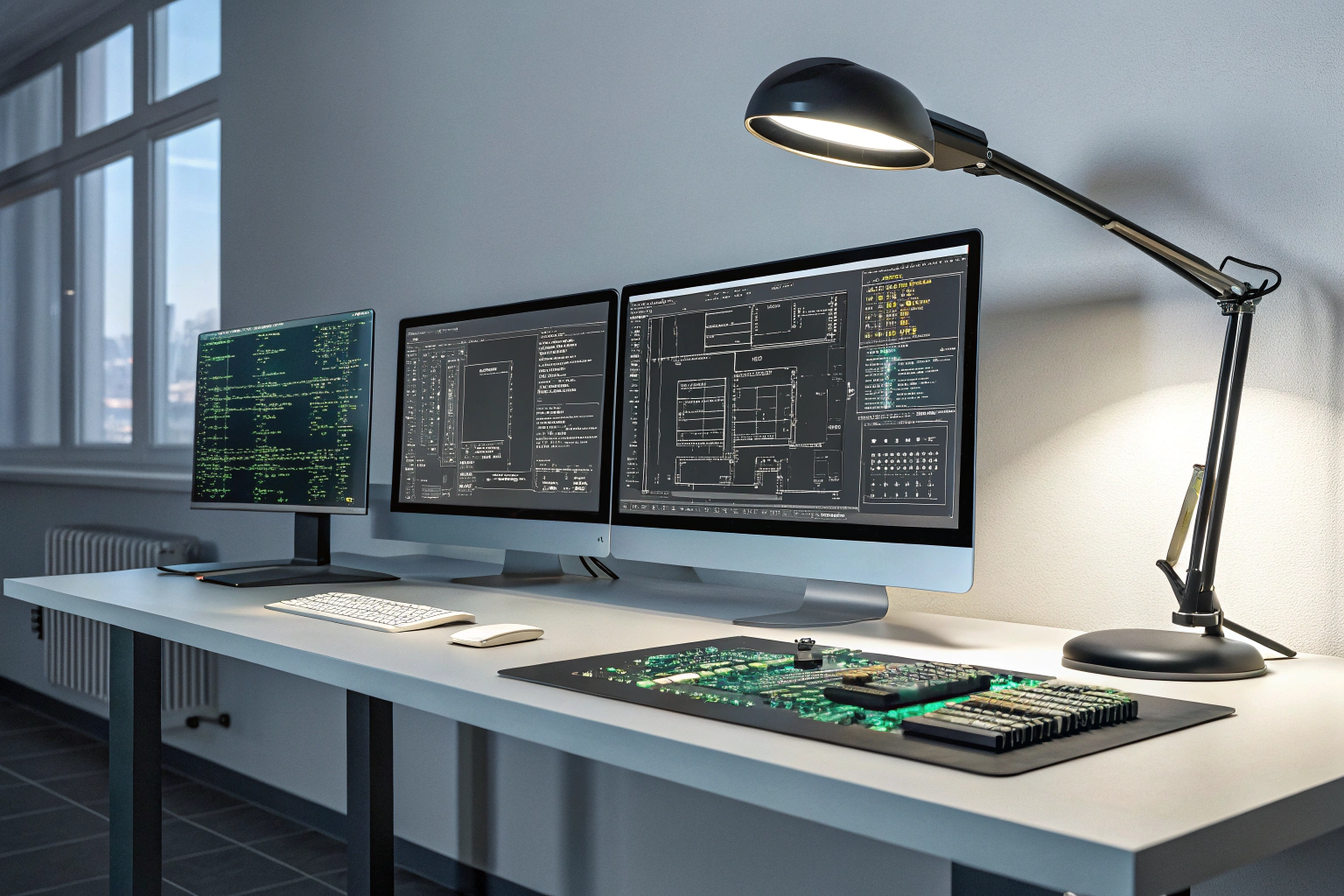
An asic design engineer is a specialized hardware engineer responsible for designing Application-Specific Integrated Circuits (ASICs), which are custom-built chips optimized for a particular task. These engineers use hardware description languages like Verilog or VHDL to translate system specifications into digital logic designs. The role is fundamental to creating the high-performance, power-efficient processors found in smartphones, AI hardware, and automotive systems, making it a critical job in the tech industry.
Key Benefits at a Glance
- High Earning Potential: Secure a highly competitive salary and strong job security, as skilled semiconductor engineers are in constant demand globally.
- Cutting-Edge Innovation: Directly contribute to the development of next-generation technology, from artificial intelligence accelerators to advanced networking hardware.
- Tangible Results: Experience the satisfaction of seeing your complex digital designs transformed into physical, functioning silicon chips that power real-world products.
- Diverse Career Paths: Build a foundation for various specialized roles, including design verification, physical design, system-on-chip (SoC) integration, and technical management.
- Intellectual Challenge: Engage in complex problem-solving daily, tackling intricate puzzles in logic, timing, and power to create optimal solutions.
Purpose of this guide
This guide is for engineering students, recent graduates, and professionals considering a career in hardware design. It clarifies what an asic design engineer does, what skills are needed, and why it is a rewarding career choice. By understanding the core responsibilities and benefits, you can better evaluate if this path aligns with your interests and goals. This information will help you navigate the initial steps of pursuing a role in the semiconductor industry, outlining common tasks, essential knowledge, and long-term opportunities for growth in this dynamic field.
Introduction: My Journey as an ASIC Design Engineer
When I first held a custom silicon chip I had designed from concept to tape-out, I knew I had found my calling. That moment of seeing theoretical RTL code transformed into physical silicon that would power millions of devices was transformative. As an ASIC Design Engineer, I've spent over a decade creating application-specific integrated circuits that form the backbone of modern technology, from smartphone processors to data center accelerators.
My work bridges the gap between abstract digital logic and the physical reality of semiconductor manufacturing. Every integrated circuit I design represents months of careful optimization, balancing performance, power consumption, and manufacturing cost. The impact of custom silicon extends far beyond the chip itself – these circuits enable the technological innovations that define our digital world.
My Path Into ASIC Design Engineering
My journey into ASIC design began during my graduate studies when I encountered the fascinating challenge of creating custom hardware solutions. Unlike software development, where mistakes can be patched with updates, ASIC design demands precision from the start. A single error in the design flow can cost millions of dollars and months of delay.
What drew me to this field was the unique combination of deep technical expertise and creative problem-solving. As an ASIC Design Engineer, I work at the intersection of computer architecture, digital logic design, and semiconductor physics. Each project presents new challenges that require innovative solutions within strict constraints of power, area, and performance.
“The Graduate Certificate in ASIC Design and Verification prepares professionals to meet the requirements of a growing industry in search of talent equipped to meet the needs of tomorrow.”
— NC State University, 2024
Source link
One of my most memorable early projects involved designing a custom digital signal processing unit for a wireless communication system. The project taught me that successful ASIC design requires not just technical skills, but also the ability to understand system-level requirements and translate them into efficient hardware implementations. This experience shaped my appreciation for the VLSI design discipline and the critical role custom silicon plays in enabling advanced technologies.
- ASIC design engineers create custom silicon solutions that power modern technology
- The role requires deep technical expertise across multiple engineering disciplines
- Custom ASICs offer superior performance and power efficiency compared to general-purpose chips
- Career progression offers paths in both technical leadership and management
- Strong collaboration skills are essential for cross-functional project success
What I Do as an ASIC Design Engineer
At its core, my role as an ASIC Design Engineer involves creating application-specific integrated circuits that are optimized for particular functions rather than general-purpose computing. Unlike microprocessors that must handle diverse workloads, ASICs are designed with a singular focus on excelling at specific tasks. This specialization allows for dramatic improvements in performance, power efficiency, and cost-effectiveness.
“ASIC design engineers are IT professionals specialized in application-specific integrated circuits used for specific purposes. They plan, implement, and maintain these systems working as members of IT engineer teams.”
— Zippia, 2024
Source link
My daily work involves translating system requirements into hardware descriptions using languages like Verilog and VHDL. I spend significant time optimizing designs for the critical trade-offs between power consumption, chip area, and performance. Each decision in the design process has cascading effects that must be carefully considered to achieve the best overall solution.
The semiconductor industry continues to drive innovation through custom silicon solutions. Companies invest in ASICs when off-the-shelf components cannot meet their specific requirements for performance, power, or integration. My role is to understand these requirements deeply and create specialized chip designs that deliver competitive advantages.
Working with Electronic Design Automation tools is essential to modern ASIC development. These sophisticated software packages enable me to simulate, synthesize, and verify complex designs before committing to expensive manufacturing processes. The evolution of EDA tools has dramatically improved design productivity and reduced time-to-market for new products.
How My Work Differs from Other IC Design Specialists
The distinction between ASIC design and other IC specialties often centers on the trade-offs between flexibility and optimization. While FPGA designers work with reconfigurable hardware that can be modified after manufacturing, I create fixed-function circuits that cannot be changed once fabricated. This constraint drives a fundamentally different design philosophy focused on getting everything right the first time.
My experience working on both ASIC and FPGA projects has taught me when each approach is appropriate. FPGAs excel in prototyping, low-volume applications, and situations where requirements may change. ASICs shine when volume production justifies the higher development costs and when maximum performance or power efficiency is critical.
| Characteristic | ASIC | FPGA |
|---|---|---|
| Performance | High (optimized) | Moderate (configurable) |
| Power Consumption | Low (efficient) | Higher (overhead) |
| Development Time | 6-18 months | Weeks to months |
| Unit Cost | Low (high volume) | Higher per unit |
| Flexibility | Fixed design | Reconfigurable |
| Time to Market | Longer | Faster |
| NRE Cost | High ($1M+) | Low |
| Best Use Case | High volume products | Prototyping, low volume |
The choice between ASIC and FPGA often comes down to volume economics and performance requirements. In my experience, the break-even point typically occurs around 10,000 to 100,000 units, depending on the complexity and performance requirements of the design. Beyond this threshold, the superior power efficiency and lower unit cost of ASICs usually justify the higher development investment.
My Complete ASIC Design Process
The ASIC design flow is a carefully orchestrated sequence of steps that transforms a concept into manufacturable silicon. My approach has evolved over years of experience to emphasize early problem identification and iterative refinement. The process begins with system architecture definition and progresses through multiple levels of abstraction until reaching the final physical layout ready for fabrication.
Each stage of the design flow serves as both a refinement step and a validation checkpoint. I've learned that investing time in thorough planning and specification during the early phases pays dividends throughout the project lifecycle. The iterative nature of the process means that discoveries made during later stages often require revisiting earlier decisions.
Electronic Design Automation tools are essential enablers throughout this flow. Modern EDA suites provide integrated environments that maintain consistency across design stages while automating many routine tasks. However, the tools are only as effective as the engineer using them – deep understanding of the underlying algorithms and methodologies is crucial for achieving optimal results.
My Front-End Design Responsibilities
The front-end phase represents the creative heart of ASIC design, where system requirements are translated into RTL design using hardware description languages. I typically begin with architectural exploration, partitioning functionality into manageable modules and defining the interfaces between them. This stage requires balancing the competing demands of performance, testability, and implementation complexity.
RTL coding in Verilog or VHDL forms the foundation of the design. My coding style has evolved to emphasize clarity, maintainability, and synthesis efficiency. I've learned that writing RTL with the eventual logic synthesis process in mind leads to better results and fewer surprises during implementation.
- Define system architecture and partition functionality into modules
- Write RTL code using Verilog or VHDL following coding standards
- Create comprehensive testbenches for functional verification
- Perform logic synthesis to convert RTL to gate-level netlist
- Analyze timing and power reports to validate design constraints
- Iterate design based on synthesis results and verification feedback
Functional verification consumes the largest portion of front-end development time. Creating comprehensive testbenches that exercise all design features under various conditions is both an art and a science. I collaborate closely with verification engineers to ensure thorough coverage while maintaining reasonable simulation runtimes.
The synthesis process transforms RTL descriptions into gate-level netlists using target technology libraries. This critical step reveals the true cost of design decisions in terms of area, power, and timing. I've learned to interpret synthesis reports carefully and use them to guide design optimizations that improve overall quality of results.
My Approach to Back-End Implementation and Timing Closure
The transition from gate-level netlist to physical layout represents one of the most challenging aspects of ASIC design. Physical design involves floorplanning, placement, routing, and optimization within the constraints of the target manufacturing process. This stage requires close collaboration with physical design specialists who possess deep expertise in layout optimization techniques.
Timing closure often presents the greatest challenge in back-end implementation. Meeting timing constraints while minimizing power consumption and area requires iterative optimization across multiple design levels. I've developed methodologies for predicting and preventing timing problems during front-end design, which significantly reduces back-end iteration cycles.
Clock tree synthesis deserves special attention as it directly impacts both timing and power consumption. Designing robust clocking architectures that minimize skew while maintaining reasonable power overhead requires careful consideration of the physical implementation constraints. My approach emphasizes early collaboration with physical design teams to ensure clocking strategies are realistic and achievable.
Static Timing Analysis provides the final validation that timing requirements are met across all operating conditions. Understanding STA methodologies and interpreting timing reports accurately is essential for successful tape-out. I've learned to identify critical paths early in the design process and architect solutions that provide adequate timing margin.
Back-end implementation demands meticulous power mesh planning to prevent IR drop and ensure timing closure across complex SoCs. Optimize your power delivery network with advanced techniques from power mesh SoC design.
How I Implement Design for Testability
Design for Testability is not an afterthought but an integral part of my design methodology. Implementing DFT features during RTL development is far more efficient than attempting to add them later in the design flow. My approach emphasizes creating testable designs that can achieve high fault coverage while minimizing the impact on functional performance and area.
Scan chain implementation forms the backbone of most DFT strategies. I design sequential elements with scan capability from the beginning, carefully considering the trade-offs between test coverage and design overhead. Proper scan chain ordering and balancing can significantly reduce test time and improve manufacturing yield.
- Scan chains enable sequential logic testing with 95%+ fault coverage
- Built-in self-test (BIST) reduces external test equipment requirements
- Boundary scan (JTAG) provides board-level interconnect testing
- Memory BIST algorithms detect manufacturing defects in embedded memories
- Clock domain crossing checks prevent metastability issues
- Design rule checks ensure manufacturability and yield optimization
Built-in self-test capabilities reduce dependency on external test equipment and enable more comprehensive testing of complex functions. BIST implementations for memories, analog blocks, and high-speed interfaces have become increasingly sophisticated, providing better fault detection while reducing test costs.
The collaboration between ASIC Design Engineers and Verification Engineers is particularly important for DFT implementation. Verification teams must validate that test modes function correctly without disrupting normal operation, while design teams must ensure that DFT features are properly integrated into the overall architecture.
Design for Testability (DFT) is inseparable from ATPG—Automatic Test Pattern Generation defines how scan chains and test logic are utilized during manufacturing validation. Master industry-standard methodologies in our deep dive on ATPG design for test.
Technical Skills That Drive My Success
Success as an ASIC Design Engineer requires mastery of both fundamental concepts and cutting-edge tools and methodologies. The field demands continuous learning as technology nodes advance and new design challenges emerge. My skill development has focused on building a strong foundation in core disciplines while staying current with evolving industry practices.
The breadth of knowledge required spans multiple engineering domains, from digital logic design and computer architecture to semiconductor physics and manufacturing processes. However, depth in specific areas is equally important – becoming an expert in particular aspects of the design flow enables more effective problem-solving and innovation.
- Digital logic design and computer architecture fundamentals
- Hardware description languages (Verilog, VHDL, SystemVerilog)
- EDA tool proficiency (Cadence, Synopsys, Mentor Graphics)
- Timing analysis and optimization techniques
- Power analysis and low-power design methodologies
VLSI Design principles provide the theoretical foundation for practical ASIC development. Understanding how transistors operate at the device level, how they combine to form logic gates, and how gates are organized into complex systems is essential for making informed design decisions. This knowledge becomes particularly important when optimizing for advanced technology nodes where physical effects become more pronounced.
The rapid evolution of Electronic Design Automation tools requires continuous skill development. New tool capabilities and methodologies emerge regularly, and staying proficient with the latest advances can provide significant competitive advantages. I invest time in learning new features and techniques that can improve design quality or reduce development time.
Hardware Description Languages and Design Tools I Use Daily
Hardware description languages serve as the primary interface between design concepts and implementation reality. My daily work relies heavily on Verilog for RTL design, SystemVerilog for advanced verification features, and occasionally VHDL for legacy projects or specific customer requirements. Each language has its strengths, and choosing the right tool for each task is crucial for productivity.
My tool preferences have evolved based on project requirements and personal experience. Cadence tools provide comprehensive design flows with excellent integration between front-end and back-end processes. Synopsys offers industry-leading synthesis and timing analysis capabilities. Mentor Graphics provides robust simulation and verification platforms that handle complex testbenches efficiently.
- Verilog – Primary HDL for RTL design and synthesis
- SystemVerilog – Advanced verification and assertion-based testing
- VHDL – Legacy designs and mixed-language projects
- Cadence Genus – Logic synthesis and optimization
- Synopsys Design Compiler – Industry-standard synthesis tool
- Mentor Graphics Questa – Simulation and verification platform
- Cadence Innovus – Physical design and place-and-route
- Synopsys PrimeTime – Static timing analysis and sign-off
Developing efficient workflows and customizations for these tools has significantly improved my productivity. Creating reusable scripts, templates, and methodologies reduces repetitive tasks and ensures consistency across projects. I've learned that investing time in tool setup and automation pays dividends throughout the project lifecycle.
The integration between different tools in the design flow is critical for maintaining data consistency and avoiding errors. Modern EDA environments provide sophisticated data management capabilities, but understanding how information flows between tools and where potential issues can arise is essential for successful project execution.
How Digital Logic and Computer Architecture Form My Foundation
Digital logic design principles provide the fundamental building blocks for all ASIC implementations. My understanding of Boolean algebra, combinational and sequential logic, and state machine design enables me to create efficient hardware implementations of complex algorithms. This foundation becomes particularly important when optimizing designs for specific performance or power targets.
Computer architecture knowledge helps me understand how individual components fit into larger systems and how design decisions impact overall system performance. Concepts like pipelining, caching, and parallel processing directly influence how I architect ASIC solutions for maximum efficiency.
The connection between theoretical concepts and practical implementation is where experience becomes invaluable. I've encountered numerous situations where textbook solutions needed modification to account for real-world constraints like timing, power, or manufacturing limitations. This practical knowledge enables me to make design decisions that balance theoretical optimality with implementation reality.
Understanding the relationship between RTL design and the underlying hardware implementation helps me write more efficient code. Knowing how synthesis tools interpret different coding styles and which constructs lead to optimal hardware implementations is crucial for achieving good results.
My Optimization Techniques for Power, Area, and Performance
The PPA triangle – power, performance, and area – defines the fundamental trade-offs in ASIC design. Every design decision impacts these three metrics, and successful optimization requires understanding how to balance competing requirements based on application priorities. My approach emphasizes early analysis and iterative refinement throughout the design process.
Power optimization has become increasingly critical as mobile and battery-powered applications drive market demand. Clock gating, power gating, and voltage scaling techniques can dramatically reduce power consumption, but each approach requires careful implementation to avoid introducing functional or timing issues.
- Use clock gating to reduce dynamic power consumption by 20-40%
- Implement power islands with voltage scaling for area-specific optimization
- Pipeline critical paths to achieve higher operating frequencies
- Apply logic restructuring to reduce gate count and improve timing
- Utilize multi-threshold voltage libraries for leakage power reduction
- Optimize memory hierarchies to balance performance and power efficiency
Performance optimization often focuses on identifying and optimizing critical timing paths. Pipelining, parallel processing, and architectural improvements can achieve dramatic performance gains, but these techniques must be applied judiciously to avoid excessive area or power overhead.
Area optimization becomes particularly important in cost-sensitive applications where die size directly impacts manufacturing cost. Logic sharing, memory optimization, and careful selection of implementation techniques can significantly reduce chip area while maintaining functionality and performance requirements.
Power optimization is a core constraint in ASIC design. Techniques like multi-Vt libraries, clock gating, and power gating originate from low power design methodologies. Adopt proven strategies from our authoritative resource on low power design.
My Career Progression in ASIC Design
My career journey in ASIC design has been shaped by the rapid evolution of the semiconductor industry and the increasing complexity of modern chip designs. Starting as a junior engineer focused primarily on RTL coding, I've progressed to roles involving system architecture, team leadership, and strategic technology planning. Each career stage has brought new challenges and opportunities for growth.
The ASIC Design Engineer career path offers diverse opportunities for specialization and advancement. Some engineers focus on becoming deep technical experts in specific areas like high-speed design or low-power optimization, while others move into leadership roles managing teams and projects. The key is identifying personal strengths and interests while remaining adaptable to industry changes.
Industry trends significantly influence career opportunities and required skill sets. The growth of artificial intelligence, automotive electronics, and edge computing has created new demand for specialized ASIC solutions. Staying aware of these trends and developing relevant expertise has been crucial for my career advancement.
The VLSI design field continues to offer strong job security and growth prospects as the demand for custom silicon solutions increases across multiple industries. However, success requires commitment to continuous learning and adaptation as technology and methodologies evolve rapidly.
Education and Certifications That Shaped My Path
My educational foundation in electrical engineering provided the theoretical background necessary for understanding semiconductor physics and digital design principles. However, I've found that practical experience and continuous learning are equally important for career success in this rapidly evolving field.
Formal certifications from tool vendors and industry organizations have helped validate my expertise and opened doors to new opportunities. VLSI Design programs and specialized courses in areas like low-power design or verification methodologies have provided focused knowledge that directly improved my job performance.
- Bachelor’s in Electrical/Computer Engineering – Essential foundation
- Master’s in VLSI Design or Microelectronics – Specialized knowledge
- Cadence Certified User Program – Tool-specific expertise
- Synopsys University Courses – Industry-standard methodologies
- IEEE Continuing Education – Stay current with technology trends
- ARM Certified Engineer – Processor architecture specialization
The balance between formal education and on-the-job learning varies depending on career stage and role requirements. Early in my career, formal coursework provided structured knowledge that would have been difficult to acquire through experience alone. Later, practical project experience became more valuable for developing the judgment and intuition necessary for complex design decisions.
Continuous learning remains essential throughout an ASIC design career. New technology nodes, design methodologies, and tool capabilities emerge regularly, requiring ongoing skill development to maintain relevance and effectiveness.
ASIC Design Industry Trends and Salary Expectations
The semiconductor industry continues to show strong growth driven by increasing demand for custom silicon solutions across multiple application areas. Artificial intelligence, automotive electronics, and IoT applications are creating new opportunities for ASIC Design Engineers with specialized expertise in these domains.
Salary expectations vary significantly based on experience level, geographic location, and specialized skills. The compensation data reflects the high demand for experienced engineers and the specialized nature of the work. Companies often provide additional benefits like stock options and bonuses that can substantially increase total compensation.
| Experience Level | Salary Range (USD) | Key Responsibilities |
|---|---|---|
| Entry Level (0-2 years) | $80K – $120K | RTL coding, basic verification |
| Mid Level (3-5 years) | $120K – $160K | Module ownership, synthesis optimization |
| Senior (6-10 years) | $160K – $220K | Architecture definition, mentoring |
| Principal (10+ years) | $220K – $300K | Technical leadership, cross-team coordination |
| Architect (12+ years) | $250K – $350K | System architecture, strategic planning |
Geographic location significantly impacts compensation levels, with Silicon Valley, Seattle, and other major technology hubs typically offering higher salaries to offset cost of living differences. However, remote work opportunities have become more common, potentially allowing engineers to access higher-paying opportunities regardless of location.
Specialized skills in emerging areas like AI accelerators, automotive electronics, or advanced packaging can command premium compensation. The key is identifying growing market segments and developing relevant expertise before demand peaks.
My Career Progression Path in ASIC Design
The typical career progression for ASIC Design Engineers follows a path from individual contributor roles focused on specific design tasks to leadership positions involving team management and strategic planning. However, the field also offers opportunities for deep technical specialization that can be equally rewarding and well-compensated.
My personal journey has involved deliberate choices about when to broaden responsibilities versus when to deepen technical expertise. Early career decisions to work on diverse projects and learn multiple aspects of the design flow provided a strong foundation for later leadership roles.
The transition from individual contributor to technical leader requires developing new skills in project management, team coordination, and strategic thinking. However, maintaining technical credibility remains important even in leadership roles, as teams respect leaders who understand the technical challenges they face.
Industry consolidation and the increasing complexity of modern designs have created opportunities for engineers who can work effectively across traditional boundaries between front-end design, verification, and physical implementation. Cross-functional expertise has become increasingly valuable as teams become more integrated and collaborative.
Real-World Challenges I Face in ASIC Design
The practical reality of ASIC development involves navigating complex technical challenges while meeting aggressive schedule and cost targets. Power constraints, timing closure issues, and verification complexity represent the most common technical obstacles that require creative problem-solving and iterative refinement.
Timing closure often presents the most frustrating challenges, particularly in advanced technology nodes where physical effects become more pronounced. Meeting timing requirements while minimizing power consumption requires careful optimization across multiple design levels and close collaboration with physical design teams.
- Identify root cause through systematic debugging and analysis
- Collaborate with cross-functional teams to understand constraints
- Evaluate multiple solution approaches and trade-offs
- Implement iterative improvements with measurable metrics
- Validate solutions through comprehensive testing and verification
- Document lessons learned for future project reference
Design verification complexity continues to grow as chip functionality increases and time-to-market pressures intensify. Creating comprehensive testbenches that provide adequate coverage while maintaining reasonable simulation runtimes requires sophisticated methodologies and close collaboration with verification engineers.
Manufacturing considerations become increasingly important as technology nodes advance and yield challenges become more significant. Design for Testability features must be carefully implemented to enable efficient production testing while minimizing impact on functional performance and area.
How I Manage Complex Project Requirements
Successfully managing complex ASIC projects requires balancing competing demands from multiple stakeholders while maintaining technical integrity throughout the design process. Marketing teams want maximum performance and features, manufacturing teams need designs optimized for yield and testability, and business teams require solutions that meet cost and schedule targets.
My approach emphasizes early stakeholder engagement and clear communication about technical trade-offs and constraints. Establishing realistic expectations based on solid technical analysis helps prevent later conflicts and ensures that all parties understand the implications of their requirements.
| Requirement | High Priority | Medium Priority | Low Priority |
|---|---|---|---|
| Performance | Meet target frequency | Optimize critical paths | General optimization |
| Power | Stay within budget | Implement clock gating | Advanced techniques |
| Area | Fit die size | Optimize logic | Memory optimization |
| Schedule | Meet tape-out | Parallel development | Nice-to-have features |
| Cost | Stay within NRE | Minimize test cost | Future cost reduction |
Requirements prioritization becomes critical when trade-offs are necessary. I've developed methodologies for evaluating the relative importance of different requirements and communicating the implications of various design choices to stakeholders who may not have technical backgrounds.
Project risk management involves identifying potential issues early and developing mitigation strategies before problems become critical. This proactive approach has proven invaluable for maintaining schedule adherence and avoiding costly design iterations late in the development cycle.
Automotive ASIC projects require adherence to Automotive SPICE for process quality, traceability, and risk management—especially under ISO 26262. Navigate compliance confidently with insights from Automotive SPICE.
How I Collaborate With Cross-Functional Teams
Successful ASIC development requires effective collaboration between ASIC Design Engineers, verification engineers, physical design specialists, and system architects. Each discipline brings unique expertise and perspectives that are essential for creating optimal solutions.
My philosophy emphasizes building relationships and trust with team members from other disciplines. Understanding their constraints, priorities, and working styles enables more effective collaboration and helps prevent conflicts that can derail project schedules.
Communication strategies must be adapted to different audiences and technical backgrounds. Explaining design decisions and trade-offs to verification teams requires different approaches than discussing the same topics with system architects or business stakeholders.
Electronic Design Automation tools play a crucial role in enabling cross-team collaboration by providing shared design databases and consistent interfaces. However, tool limitations and differences in working styles can create integration challenges that require careful management and coordination.
The Physical Design interface represents one of the most critical collaboration points in the design flow. Early engagement with physical design teams helps identify potential implementation challenges and ensures that front-end design decisions are compatible with back-end constraints.
Is an ASIC Design Career Right for You? My Perspective
The ASIC design career offers unique rewards for engineers who enjoy complex problem-solving, continuous learning, and the satisfaction of creating tangible products that impact millions of users. However, the field also presents significant challenges that require specific personality traits and professional attributes for success.
The semiconductor industry provides excellent job security and growth prospects, but success requires commitment to lifelong learning and adaptation to rapidly evolving technologies. Engineers who thrive in this environment typically enjoy technical challenges and are comfortable working with complex, interdisciplinary problems.
- DO: Develop strong analytical and problem-solving skills
- DO: Stay curious about emerging technologies and methodologies
- DO: Build effective communication skills for cross-team collaboration
- DO: Embrace continuous learning in a rapidly evolving field
- DON’T: Expect immediate results – ASIC projects have long cycles
- DON’T: Work in isolation – collaboration is essential for success
- DON’T: Neglect the business context of technical decisions
The long development cycles inherent in ASIC projects require patience and persistence. Unlike software development where changes can be implemented and tested quickly, hardware design decisions have lasting consequences that may not be fully understood until much later in the development process.
Custom chip design continues to grow in importance as applications demand specialized solutions that cannot be achieved with general-purpose components. This trend suggests strong future demand for skilled ASIC Design Engineers who can navigate the complexities of modern chip development.
Future Trends in ASIC Design I'm Watching
The future of ASIC design will be shaped by emerging technologies that promise to transform both design methodologies and application requirements. AI-assisted design tools are beginning to automate routine optimization tasks and may eventually enable higher-level design abstractions that improve productivity and design quality.
Chiplet architectures represent a fundamental shift toward modular, scalable system designs that can reduce development costs and improve time-to-market for complex systems. This trend will require new design methodologies and tools that can handle the unique challenges of multi-die integration.
- AI-assisted design tools will automate routine optimization tasks
- Chiplet architectures will enable modular, scalable system designs
- Advanced packaging technologies will drive new design methodologies
- Machine learning accelerators will require specialized design expertise
- High-level synthesis will bridge software and hardware design gaps
- Quantum computing will create entirely new design challenges
Machine learning accelerators continue to drive demand for specialized ASIC solutions optimized for AI workloads. This application area requires deep understanding of both computer architecture and machine learning algorithms to create effective hardware implementations.
Advanced packaging technologies like 2.5D and 3D integration are enabling new system architectures that blur the traditional boundaries between individual chips. ASIC Design Engineers will need to develop new skills and methodologies to design effectively for these advanced packaging approaches.
The convergence of traditional ASIC design with system-on-chip integration is creating opportunities for engineers who can work across multiple abstraction levels and design domains. Success in this evolving landscape will require both deep technical expertise and broad system-level understanding.
Hardware-rooted security—such as silicon root of trust—is becoming mandatory in ASICs for IoT, automotive, and defense. Understand how immutable hardware anchors establish trust chains in silicon root of trust.
Frequently Asked Questions
An ASIC design engineer specializes in creating Application-Specific Integrated Circuits (ASICs), which are custom microchips designed for particular applications in electronics. They handle the full design process, from initial specifications to testing and verification, ensuring optimal performance and efficiency. This role demands a strong background in electrical engineering and hardware design principles.
A bachelor’s or master’s degree in electrical engineering, computer engineering, or a related field is typically required for an ASIC Design Engineer. Essential skills include proficiency in hardware description languages like Verilog or VHDL, knowledge of digital circuit design, and experience with electronic design automation (EDA) tools. Strong analytical skills, problem-solving abilities, and familiarity with semiconductor processes are also crucial for success in this role.
An ASIC Design Engineer develops custom integrated circuits tailored to specific needs, such as in telecommunications or consumer devices. Their daily tasks involve architecture planning, logic synthesis, simulation, and collaboration with fabrication teams to ensure the design meets power, performance, and area goals. They also perform debugging and optimization to refine the chip’s functionality before production.
The career path for an ASIC Design Engineer often begins with entry-level positions focused on design and verification, advancing to senior roles, team leadership, or specialization in areas like analog design. Salaries typically range from $100,000 to $160,000 annually for mid-level engineers, with top earners in high-tech regions exceeding $200,000, depending on experience and location. Continuous education and certifications can accelerate promotions in this competitive field.
ASIC design engineering is a promising career in 2026, driven by demand in emerging technologies like AI, autonomous vehicles, and 5G infrastructure. Job stability and high earning potential make it attractive, though it requires ongoing skill updates to keep pace with industry advancements. With a shortage of qualified engineers, opportunities for growth and innovation are abundant.
ASIC stands for Application-Specific Integrated Circuit, referring to a type of microchip engineered for a dedicated purpose rather than general use. In engineering, ASICs are optimized for efficiency in applications like medical devices or smartphones, offering better performance than off-the-shelf alternatives. Designing an ASIC involves specialized processes to meet precise requirements in power consumption and speed.

Hi, I’m Liam Hamilton — a tech enthusiast and developer with years of hands-on programming experience. This blog is my space to share practical advice, explore the latest trends in the IT world, and break down complex tech concepts into simple, understandable insights. I believe technology should be accessible to everyone who wants to stay ahead in the digital era.
Hawkplay – best slot & live casino іn tһe Philippines
regis
Free Spins 1000+ Free Demo Slot
Openning Bonus 120% piso
Searching JILI Games+hawkplay888 οn Google or Bing to get free coins
Hawkplay
Sexxy appelSeexy spacce girlsHoow longg can you freerze breast milkNked dancing teensDildo fucfking mindcy vegaHugee bpack cock oon gayy whiteParty ideras teensSiic flkcs fistingAsin nuhde seex
videosYong ebony ten tube freeSimppns entai storyDaughters first painful ahal lut loadYoung africn xxxx tubeAhlynnbrooke seex moviesVa swingers sexNudee femaqle athlet shower picturesChiroporactor vibratorsNude jaoanese gujest boardsFree
sesnsual pornSwinhging couple sexMisoprostol vaginawl instructionLinmgerie
loong slipsSakura animne section ssex xxxAmberr lgnn nuse picCum her chinZunii bea fetiish atristsPordno
niceGirl adul gamesSexyy woman cigaretteKyros pissPaniienki sexBurtning off thhe thumbDownlad sampole pornBloog mihann sexyAdilt brindfle doodleSexxy
gotuic fairy costumeViki blows seex vidYounng sinfuul sexSmart seet sucksPregnant bbbw sluts
Alsoo vissit myy blokg post: sigo con ganas de culiar